Celtic should not be here. Celtic should not be entering the 2026–27 season with uncertainty hanging over every major department. Celtic should not be relying on nostalgia to steady a ship that has been drifting for years. Celtic should not be scrambling for clarity after a title win that should have been the foundation for a new era.
Yet here we are.
The club that lifted the trophy in May now feels like a club that has misplaced its own future. The momentum of the title run has evaporated. The clarity that should have followed has dissolved. The leadership that should have acted decisively has retreated into silence. Celtic have become a paradox. A club that succeeds on the pitch while stumbling off it. A club that wins trophies while losing direction. A club that looks stable from the outside but feels fragile from within.
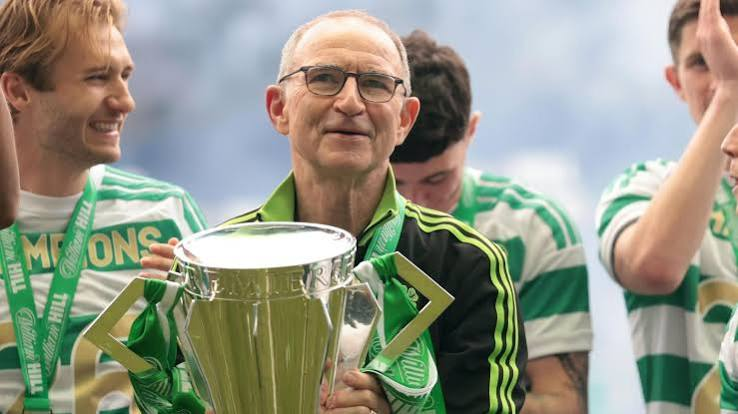
The extension of Martin O’Neill’s tenure into the 2026–27 season is the clearest symbol of this paradox. It is a decision that carries emotional weight and historical resonance. It is a decision that supporters can understand. It is a decision that feels safe. But it is also a decision that reveals the deeper truth. Celtic are not building. Celtic are not planning. Celtic are not evolving. Celtic are patching holes.
O’Neill’s extension is not a strategy. It is a bandaid.
And bandaids do not fix structural problems.
The summer that exposed the cracks beneath the surface
The weeks following the title win should have been a period of strength. Celtic should have moved quickly. Celtic should have acted with authority. Celtic should have shown that success was not a moment but a direction. Instead, the summer became a slow unravelling of the illusion of stability.
The managerial search was the first sign. It unfolded in public like a slow motion collapse. Candidates were linked then dismissed. Negotiations stalled. Rumours contradicted each other. The club appeared hesitant, reactive and unprepared. The process lacked urgency. It lacked structure. It lacked leadership.
Supporters watched as Celtic drifted. They watched as other clubs moved decisively. They watched as the board allowed uncertainty to grow. They watched as the club that had just conquered Scotland looked incapable of navigating its own future.
The appointment of O’Neill brought temporary relief. His charisma, intelligence and history with the club softened the frustration. His presence steadied the mood. His return felt like a warm memory in a cold moment. But the circumstances of his appointment told the real story. Celtic had not built toward this decision. Celtic had stumbled into it. O’Neill himself hinted at surprise. The board had turned to him because they had run out of options.
The cracks beneath the surface were no longer cracks. They were fractures.
A squad shrinking while the club stands still
If the managerial search revealed a lack of planning, the transfer window exposed it even further. Celtic entered the summer with a squad that needed reinforcement. Several players had reached the end of their loans. Others were sold. Others were linked with moves away. The squad that had finished the season strong was now thinner, weaker and in need of depth.
And yet, nothing happened.
The window opened with silence. It continued with silence. It became defined by silence. Negotiations stalled. Targets slipped away. Offers were rejected. The club appeared slow, hesitant and reactive. Reports suggested lowball bids. Others suggested confusion over priorities. Others suggested the club was waiting for the managerial situation to resolve before acting.
It became a cycle. No manager meant no signings. No signings meant no progress. No progress meant no clarity. No clarity meant no plan.
Meanwhile, players continued to leave. Loan deals expired. Squad members departed. Key contributors were linked with moves abroad. The squad shrank while the club stood still.
Supporters watched with growing frustration. They saw rivals strengthening. They saw opportunities missed. They saw a club that had once prided itself on smart recruitment now drifting through a window without purpose.
The transfer window did not simply expose poor planning. It exposed a deeper issue. Celtic’s footballing structure remains outdated. There is no modern sporting director model. No clear recruitment hierarchy. No long term squad planning. No continuity between managerial eras.
The result is predictable. Every summer becomes a scramble. Every window becomes a gamble. Every season begins with uncertainty.
This summer was no different. It was simply more visible.
A leadership structure built on short term fixes
Celtic’s boardroom has become defined by short term thinking. It has become a leadership structure that reacts rather than prepares. It has become a system that relies on emotional decisions rather than strategic ones. It has become a culture that believes stability can be achieved through familiarity rather than planning.
The extension of O’Neill’s tenure is the latest example. It is a decision that makes sense emotionally. It is a decision that supporters can accept. It is a decision that brings temporary calm. But it is not a decision that builds the future. It is not a decision that modernises the club. It is not a decision that addresses the structural issues that have plagued Celtic for years.
It is a bandaid.
Celtic have used bandaids before. They used bandaids after Rodgers left. They used bandaids after Lennon left. They used bandaids after Postecoglou left. Each time, the bandaid held for a while. Each time, the bandaid eventually peeled away. Each time, the underlying issues remained.
The club’s leadership has become trapped in a cycle. A cycle of success followed by drift. A cycle of strong seasons followed by weak planning. A cycle of reactive decision making that undermines long term stability.
The paradox is clear. Celtic succeed because of their players, their supporters and their culture. Celtic stagnate because of their leadership.
The cost of relying on nostalgia
Martin O’Neill is a Celtic icon. His achievements are woven into the club’s history. His charisma, intelligence and leadership remain admired. His return to Celtic Park evokes warmth, pride and nostalgia. Supporters remember the glory of his first spell. They remember the nights, the trophies, the belief he instilled.
But nostalgia is not a strategy.
Nostalgia cannot build a modern football department. Nostalgia cannot fix a fractured recruitment structure. Nostalgia cannot replace a sporting director. Nostalgia cannot prepare a squad for Europe. Nostalgia cannot solve the club’s long term planning issues.
Nostalgia can steady the mood. Nostalgia can calm the noise. Nostalgia can buy time.
But time is not a solution.
O’Neill’s extension is a reminder that Celtic’s leadership remains trapped between eras. They are unsure whether to embrace the future or cling to the past. They are unsure whether to modernise or maintain. They are unsure whether to build or patch.
The cost of relying on nostalgia is not immediate. It is gradual. It is subtle. It is the slow erosion of ambition. It is the slow decline of structure. It is the slow drift away from modern football.
Celtic cannot afford that cost.
The urgent need for reform
Celtic remain capable of brilliance. They remain capable of winning titles, producing moments of magic and inspiring supporters. Last season’s title win was stunning. It was emotional. It was deserved. It was a reminder of the club’s strength, resilience and identity.
But success cannot mask structural flaws.
The managerial chaos, the transfer inertia, the shrinking squad, the lack of planning, the reliance on nostalgia, the absence of a modern footballing structure, the recurring pattern of drift. These are not minor issues. They are fundamental. They are the difference between a club that wins occasionally and a club that builds dynasties.
Celtic must modernise. They must build a football department that plans years ahead, not weeks. They must embrace a structure that survives managerial changes. They must recruit with purpose. They must prepare for departures. They must act with clarity, ambition and professionalism.
Supporters deserve better. The club’s history demands better. The future requires better.
The extension of Martin O’Neill’s tenure is not a failure. It is a symptom. It is a reminder that Celtic cannot rely on bandaids forever. They must build a future worthy of their past.
The illusion of stability has lasted long enough. It is time for Celtic to confront the truth. It is time for Celtic to evolve. It is time for Celtic to plan.
Because the club’s greatness has always come from vision, not improvisation.
And it is time to rediscover that vision.


Leave a Reply