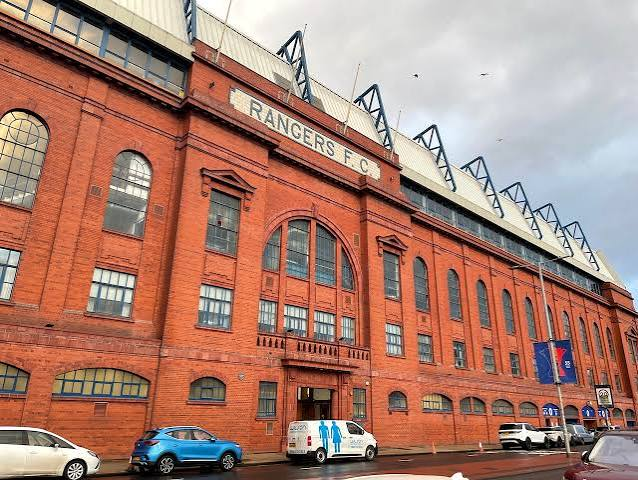
There are defeats that sting, defeats that frustrate, and defeats that linger. Then there are defeats like the one at the Shit Pit. Defeats that strip away the illusion, defeats that reveal the truth, defeats that show a club held together by nostalgia and hope rather than planning and leadership. Celtic did not simply lose. Celtic were unmasked.
Ibrox, 3–0, and the Moment Celtic Could No Longer Pretend
There are defeats that sting and defeats that bruise, but the 3–0 collapse at Ibrox was something else entirely. It was a moment of revelation. A moment when every Celtic supporter watching realised, with a sinking clarity, that the club is not simply underperforming. It is structurally broken. The performance was abject from the first whistle, passive in every duel, confused in every phase, and devoid of any identity that resembled a modern football team. Celtic did not look beaten by Rangers. Celtic looked beaten by Celtic.
Martin O’Neill admitted afterwards that he was surprised by how poor his side were. That admission, honest as it was, only deepened the sense of crisis. A manager of his stature should never be surprised by his own team. Not in a fixture of this magnitude. Not in a derby that defines seasons. Not in a moment when clarity and preparation should be absolute. His shock became symbolic of a club that has lost control of its own direction.
The basics fell apart. Celtic misplaced passes under no pressure. They lost duels all over the pitch. They looked physically overwhelmed by a Rangers side that were organised, aggressive and unmistakably modern. Derek McInnes’ team pressed with purpose, transitioned with speed, and played with a structure that Celtic could not match. Every minute of the match felt like a reminder that Rangers have moved forward while Celtic have stood still.
Even the selection decisions felt muddled. The choice not to start Hassan, explained awkwardly after the match, became a lightning rod for supporter frustration. It was not just about one player. It was about the broader sense that Celtic’s coaching staff are improvising rather than planning, reacting rather than leading, guessing rather than knowing. The Hassan situation became a metaphor for the club’s wider confusion.
The reaction from supporters was immediate and furious. Social media was a wall of frustration, not at the players, but at the leadership that put them in this position. Fans did not see a bad day. They saw the inevitable outcome of years of drift, denial and boardroom complacency.
This was not a one‑off. It was not an anomaly. It was not a freak result. It was the moment Celtic could no longer pretend that everything was fine. The illusion of stability died at Ibrox, and the truth stood in its place. A truth supporters have been warning about for years. A truth the board has refused to confront. A truth that is now impossible to ignore.
Martin O’Neill: A Legend Dragged Back Into a Fight He Should Never Have Been Asked to Join
Martin O’Neill should never have been anywhere near this mess. That is the painful truth Celtic supporters are now confronting. A man who built one of the club’s greatest modern eras, a man whose name still echoes through European nights and title‑winning seasons, has been dragged back into a fight he should never have been asked to join. He is seventy‑four years old. He had been out of management for five, nearly six years. He was living the life of a respected elder statesman, a figure whose legacy was secure, untouchable, and deeply loved. And then Celtic called.
His return was emotional. It was nostalgic. It was romantic in the way only Celtic can be romantic. But it was also completely unplanned. It was not the product of a modern football structure. It was not the result of a long‑term succession strategy. It was not part of a coherent vision for the future. It was a board scrambling for a solution and reaching for the past because the present offered nothing. O’Neill became a bandaid before he ever stepped back into the dugout.
At Ibrox, the bandaid tore.
His tactical flaws were exposed brutally. Celtic looked physically inferior, technically sloppy, and structurally incoherent. O’Neill admitted as much himself, acknowledging that Rangers were stronger, sharper, and far more organised. It was a moment of honesty, but also a moment of heartbreak. Hearing a club legend speak about Celtic being outmatched in every department felt like watching someone apologise for a problem they did not create.
Even his explanation for Hassan not starting revealed the deeper issue. It was muddled, reactive, and uncertain. It sounded like a manager trying to justify a decision made without the support of a modern coaching or recruitment framework. It was not incompetence. It was confusion. And that confusion came from being placed in a role that no seventy‑four‑year‑old, out of management for half a decade, should have been expected to carry.
The anger now rising among supporters is not directed at O’Neill. It is directed at the people who put him in this position. Fans are openly unhappy, not because he has suddenly become a poor manager, but because he has been asked to perform a job that belongs to a younger, modern, fully supported head coach operating inside a functioning football department. O’Neill is being judged for failures that are not his. He is being criticised for problems he inherited. He is being tarnished by a leadership that refuses to modernise.
His reputation, once untouchable, is now being chipped away by a board that has used him as a shield. A legend has been placed in front of a burning building and told to hold the hose. The result was inevitable. The damage was predictable. And the responsibility lies entirely with those who dragged him back into a fight he should never have been asked to join.
Shaun Maloney: The Failed Apprentice Who Symbolises Celtic’s Lack of Ambition
Shaun Maloney’s presence in the Celtic dugout is not a scandal. It is a symptom. A symptom of a club that has stopped aiming high, stopped planning ahead, and stopped behaving like an institution that once set standards for the rest of Scotland. Maloney is not the villain of this story. He is the inevitable by‑product of a board that hires based on familiarity rather than competence, sentiment rather than structure, and convenience rather than ambition.
His managerial record speaks for itself. Maloney failed at Hibernian. He failed at Wigan. Both spells ended quickly, both ended badly, and both revealed the same pattern: a coach with ideas but no evidence he can implement them at senior level. His teams struggled for identity, struggled for consistency, and struggled for results. In modern football, those failures should have been decisive. They should have ruled him out of contention for a role at a club of Celtic’s size. Instead, they became irrelevant because Celtic’s board was not looking for excellence. They were looking for someone they knew.
His appointment was not strategic. It was convenient. It was the kind of decision a club makes when it has no long‑term plan, no succession model, and no modern football department guiding its choices. Maloney arrived not because he was the best candidate, but because he was available, familiar, and easy to slot into a coaching structure that already lacked clarity. He became part of a staff assembled through nostalgia rather than vision.
His tactical influence is difficult to define because it is inconsistent, contradictory, and often invisible. Celtic’s performances swing between cautious possession, chaotic transitions, and long spells of aimless play that suggest a team without a unified idea of how it wants to attack or defend. Maloney’s fingerprints are on none of it. Or perhaps they are on all of it. That is the problem. Nothing about Celtic’s tactical identity feels coherent enough to trace back to a single mind.
The Rangers loss exposed this gulf brutally. Derek McInnes’ side looked modern, structured, and physically prepared. Celtic looked like a team coached by committee, a team without a clear plan, a team improvising its way through a fixture that demands precision. Maloney’s presence beside O’Neill only highlighted the contrast. One man is a legend dragged out of retirement. The other is a failed apprentice trying to rebuild a career in the wrong environment. Together, they represent a club clinging to the past while pretending it is building for the future.
Maloney is not the problem. He is the evidence. Evidence of a board that has stopped aiming for excellence. Evidence of a club that has forgotten how to hire strategically. Evidence of a leadership that believes familiarity is a substitute for competence. His role at Celtic is not a mistake. It is a mirror held up to the club’s ambition. And right now, that ambition is nowhere to be seen.
The Boardroom Rot: A Decade of Drift, Denial and Delusion
Celtic’s collapse at Ibrox did not begin at Ibrox. It began years ago, in boardrooms where comfort was mistaken for competence, where nostalgia was mistaken for strategy, and where silence was mistaken for leadership. The 3–0 defeat was not an isolated failure. It was the inevitable consequence of a decade spent drifting without a plan, without a structure, and without the faintest understanding of how modern football operates. Celtic were not undone by Rangers. Celtic were undone by Celtic.
The club has refused, year after year, to modernise its football department. While rivals built sporting director models, recruitment teams, data‑driven scouting networks and succession plans, Celtic clung to an outdated structure that depends entirely on the manager. No sporting director. No long‑term football architect. No continuity between eras. Every managerial change becomes a reset. Every reset becomes a scramble. Every scramble becomes a crisis. The board has created a system where stability is impossible because stability has never been designed into the club.
Succession planning does not exist. When managers leave, Celtic react with panic rather than preparation. Rodgers left and Celtic scrambled. Postecoglou left and Celtic scrambled. Even O’Neill’s return was a scramble, a nostalgic emergency measure rather than a strategic appointment. The club behaves as if managerial departures are unpredictable acts of nature rather than inevitable moments that require foresight. The result is a leadership culture built on improvisation instead of planning.
Recruitment is no better. There is no long‑term strategy, no coherent profile of the players Celtic want, no clear plan for how the squad should evolve. Transfer windows are treated like suggestions rather than obligations. The club repeatedly fails to act early, repeatedly fails to secure priority targets, repeatedly fails to strengthen after success, and repeatedly enters seasons underprepared. Every summer feels like déjà vu. Every January feels like damage control. Every window exposes the same truth: Celtic do not build squads. Celtic assemble them.
The coaching structure is equally incoherent. Assistants come and go. Analysts leave without replacement. Youth integration is inconsistent. Tactical identity shifts with every staff change. The club has no footballing spine, no institutional philosophy, no continuity of ideas. Instead, Celtic rely on familiar faces, sentimental appointments, and the belief that emotional connection can replace professional competence. It cannot.
The board’s silence only deepens the rot. They do not communicate. They do not explain. They do not reassure. They do not lead. Their absence creates instability. Their refusal to address supporter concerns creates resentment. Their insistence on operating behind closed doors creates distrust. Fans are not frustrated because they are impatient. Fans are frustrated because they can see what the board refuses to acknowledge: Celtic are being run like a club that believes success is guaranteed rather than earned.
That frustration is now widespread, visible and entirely justified. Supporters have been warning the club for years. Warning about the drift. Warning about the lack of planning. Warning about the refusal to modernise. Warning about the reliance on nostalgia. Warning about the shrinking squad. Warning about the outdated coaching model. Warning about the absence of a sporting director. Warning about the board’s complacency. At Ibrox, those warnings became reality.
The Rangers loss is not the cause of Celtic’s crisis. It is the consequence. The consequence of a decade of denial. The consequence of a leadership that refuses to evolve. The consequence of a board that has mistaken survival for success. The consequence of a club that has allowed rot to spread through its foundations while insisting everything is fine.
Celtic were not beaten by a better team. Celtic were beaten by their own refusal to change. The board built this defeat long before Rangers scored.
The Squad Left to Rot: A Team Shrinking While the Board Sleeps
Celtic’s squad did not collapse at Ibrox because it is weak. It collapsed because it has been left to rot. The problems on the pitch are not accidental. They are structural. They are the result of years of neglect, years of short‑term thinking, and years of a board that has treated squad building like an afterthought rather than a responsibility. The team that walked into Ibrox was not a reflection of Celtic’s potential. It was a reflection of Celtic’s leadership.
Loan players left in the summer and were not replaced. Key contributors departed without succession plans. Others were linked with moves away while the club stood still. Pre‑season arrived with no meaningful signings, no injection of pace or physicality, and no attempt to address the glaring weaknesses that have been obvious for months. Celtic entered the new campaign with a squad that had shrunk, thinned, and regressed. The board slept through the window, and the squad paid the price.
Martin O’Neill was forced into tactical compromises that no manager should have to make. He relied on ageing players who can no longer carry the physical load of modern football. He relied on untested youth who have been thrown into senior responsibility without a proper development pathway. He relied on makeshift solutions because the club provided him with no real ones. Celtic’s squad issues are not about individual players. They are about the absence of a functioning football department.
The data tells the same story. Sam Johnstone’s numbers show inconsistency, a keeper capable of brilliance but equally capable of volatility when exposed by a chaotic defensive structure. Viljami Sinisalo’s data shows potential, but also the kind of rawness that demands careful integration, not immediate pressure. Colby Donovan’s metrics show promise wrapped in inexperience, a player who should be developing gradually rather than being thrown into high‑stakes fixtures because the squad has no depth.
And then there is Hassan. His non‑selection at Ibrox has become symbolic of Celtic’s wider failure to integrate or develop talent. O’Neill’s explanation was muddled, reactive, and uncertain, revealing a club that does not know how to manage its own prospects. Hassan is not the issue. He is the metaphor. A talented player caught in a system that has no plan for him, no pathway for him, and no clarity on how to use him. Celtic’s youth are not being nurtured. They are being neglected.
The Rangers defeat exposed everything. The lack of depth. The lack of pace. The lack of physicality. The lack of tactical clarity. Celtic looked like a team stitched together from leftovers, not a squad built with purpose. They looked like a team that had been asked to compete without the tools required to do so. They looked like a team that has been failed by the people responsible for building it.
The squad is not failing. It is being failed. Failed by a board that refuses to invest properly. Failed by a leadership that refuses to plan. Failed by a structure that refuses to modernise. Celtic’s players are carrying the weight of decisions they did not make, and at Ibrox, that weight finally became too heavy to bear.
The Cultural Problem: Celtic Still Think They Can Win on Emotion Alone
Celtic’s greatest strength has always been its soul. Its history, its romance, its emotional gravity. The club carries a mythology that few institutions in world football can match. Nights under the lights. Legends carved into memory. A support that sings with a conviction that feels older than the game itself. These things matter. They define Celtic. They give the club its identity. But they cannot replace structure, and they cannot substitute for modern football.
For too long, Celtic have behaved like a giant that refuses to evolve. A club convinced that emotion can do the work of planning. A club that believes history can stand in for recruitment. A club that thinks nostalgia can cover the cracks left by a decade of boardroom drift. The leadership has convinced itself that Celtic can survive on culture alone, that the club’s aura is enough to carry it through seasons, windows, and crises. It is a beautiful idea. It is also a dangerous one.
Modern football does not care about romance. It demands planning, data, recruitment, succession, investment, and clarity. It demands a sporting director. It demands a coherent coaching structure. It demands a squad built with purpose rather than hope. Celtic refuse to accept this. The board clings to the past as if it is a strategy, as if the club’s history can be weaponised against opponents who have embraced the future. It cannot.
The Rangers loss was the moment supporters realised the truth. Celtic are living in yesterday. The club is operating with the mindset of a bygone era, while rivals have moved forward. Derek McInnes’ Rangers looked modern, physical, structured, and prepared. Celtic looked like a museum exhibit. A relic of what the club used to be. A reminder of what happens when emotion is asked to do the job of infrastructure.
The contrast was painful. Rangers pressed with intensity. Celtic wilted. Rangers transitioned with speed. Celtic hesitated. Rangers played with a clear identity. Celtic played with a memory of one. The defeat was not just tactical. It was cultural. It was the moment Celtic’s romantic self‑image collided with the reality of modern football, and reality won.
Celtic’s culture is powerful. It is sacred. It is part of the club’s soul. But culture is not a plan. Emotion is not a strategy. Nostalgia is not a blueprint. Celtic cannot keep trying to win games with memories. The club must evolve, or it will continue to be outpaced by teams that already have. The loss at Ibrox was not just a warning. It was a verdict. A verdict on a club that has mistaken its past for its future, and is now paying the price.
The Path Forward: Celtic Must Choose Between the Past and the Future
Celtic have reached a crossroads that can no longer be ignored. The defeat at Ibrox was not just a failure of tactics or selection. It was a failure of direction. It was the moment the club’s long‑standing habit of clinging to the past finally collided with the demands of the present. The illusion of stability has died. What remains is the truth: Celtic must choose between the comfort of yesterday and the responsibility of tomorrow.
Martin O’Neill deserves respect. He deserves gratitude. He deserves to be remembered as one of the great architects of Celtic’s modern identity. But he cannot be the long‑term solution. Asking a seventy‑four‑year‑old, pulled out of retirement after half a decade away from management, to rebuild a fractured club is not leadership. It is avoidance. It is the board outsourcing its responsibilities to a man who has already given everything he had to give.
Shaun Maloney cannot be the long‑term solution either. His presence is not a scandal, but it is a symbol. A symbol of a club that has stopped aiming high. A club that hires based on familiarity rather than excellence. A club that fills gaps with convenient choices instead of strategic ones. Maloney is not the problem. He is the evidence of the problem.
The board must modernise or step aside. There is no middle ground left. Celtic need a sporting director. Not as a luxury, but as a necessity. Someone who can build a football department that survives managerial changes, who can create continuity, who can design a recruitment strategy that spans years rather than windows. Celtic need a modern coaching structure, one built on clarity, data, and defined roles rather than nostalgia and improvisation.
Recruitment must be rebuilt from the ground up. The club needs profiles, pathways, succession plans, and a clear understanding of how the squad should evolve. Celtic cannot continue entering seasons half‑prepared, hoping that culture will compensate for structural failure. Nostalgia must stop being the default solution. It is not a strategy. It is not a plan. It is not a future.
Celtic must build a future worthy of their past. A future that honours the club’s identity without being trapped by it. A future that embraces modern football rather than resisting it. A future where legends are celebrated, not used as emergency measures. A future where youth are developed, not neglected. A future where supporters feel pride, not dread.
The Rangers loss should be the moment everything changes. The moment the board confronts reality. The moment Celtic stop pretending that emotion can replace infrastructure. The moment the club finally accepts that the world has moved forward and Celtic must move with it.
The illusion is gone. What happens next will define the club for years.


Leave a comment