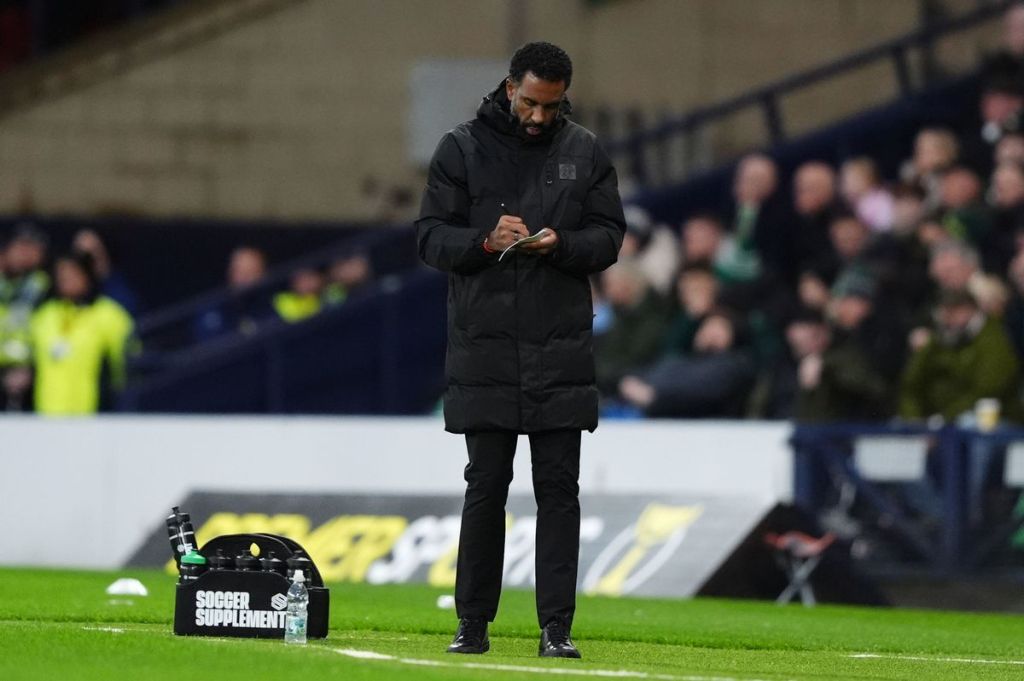
When Martin O’Neill strode into Celtic Park as caretaker at the end of October, the club were eight points adrift and searching for a pulse. He steadied the ship, won seven of eight, drew Celtic level on points at the summit and delivered a place in the League Cup final, then handed the reins to Wilfried Nancy with the team poised to push on.
Nancy’s appointment, a two-and-a-half-year deal announced on December 3, came with high ideals and a clear footballing philosophy forged in MLS success. He spoke about adding “nuances” rather than tearing it all up, even citing his study of Gian Piero Gasperini’s methods.
What followed was a baptism of fire made hotter by the fixture list: Hearts in the league, Roma in Europe, and St Mirren in the cup final, three defining games inside ten days.
Celtic lost them all. Hearts won 2–1 at Parkhead in Nancy’s debut, a set-piece and transitional clinic that exposed soft spots in the new shape.
Roma then left Paradise with a 3–0 Europa League rout; Celtic missed a late first-half penalty and saw a second-half strike ruled out, while the visitors repeatedly exploited space in the half-channels and wide areas.
And at Hampden, St Mirren were clinical in a 3–1 League Cup final win, carving through Celtic’s hesitations and transitions with unnerving ease.
The nightmare deepened this morning in Dundee. Despite leading through Daizen Maeda and creating ample first-half chances, Celtic lost 2–1 to Dundee United after a three-minute second-half swing. It marks Nancy’s fourth straight defeat, an unwanted run that hasn’t been seen in 47 years.
The headlines write themselves, but the mood music is louder. Chris Sutton, hardly shy, suggested the players are “substandard” relative to the demands and that Celtic now look like “a third-place team,” while fans chanted for O’Neill and turned their ire towards the board.
Strip away the fury and what remains are three interlocking truths. First, Nancy’s football is bold and clear. He wants a front‑footed possession game, often with a back three and a box midfield, stretching wing‑backs to provide width and overloads. That demands tactical intelligence, physical range, and decision‑making in transition.
Second, the squad isn’t obviously built for it… yet. Hearts punished set pieces and diagonal runs behind wing‑backs; Roma pinned Celtic deep and feasted on the gaps; St Mirren and Dundee United found chances when Celtic lost shape in the second half. The pattern is familiar: bright starts, missed chances, then defensive disarray once the opponent shifts shape or raises intensity.
Third, this crisis is bigger than the dugout. Brendan Rodgers didn’t leave a serene, well-provisioned project; he resigned amid tensions over investment, and O’Neill’s interim run, while superb, papered over structural cracks in recruitment and squad balance. Supporters’ anger now includes the boardroom, sharpened by Peter Lawwell’s stepping down and the public chants aimed at the hierarchy.
Is Nancy the wrong fit at the wrong time, or a project worth patience if the club backs him properly? It’s tempting to reduce everything to personality and passion: sack one man, resurrect another, and watch Celtic soar. Many fans have already made that call, imploring the board to reinstall O’Neill for the rest of the season.
But even O’Neill, in his own remarks, framed the caretaker role as holding the fort; the deeper repairs require a football operation that aligns recruitment with the chosen tactical identity. If Celtic persist with Nancy’s model, January must deliver profiles that fit: genuine wing‑backs who can defend wide spaces, centre‑halves comfortable in big areas, a midfield connector who balances risk and protection, and forwards who turn early pressure into ruthless margins.
If, instead, Celtic decide the risk is too great, then changing the coach cannot be the only lever pulled. A new head on the touchline without reform in the football department simply resets the countdown on the same bomb. The league is still salvageable; Europe’s fate is bruised, not buried; and time exists to pivot… if the club acts with clarity rather than crisis management.
The emotional ledger is obvious. Supporters see a team that toys with dominance but can’t sustain control, a shape that promises sophistication but delivers fragility, and a recruitment plan that left Celtic gambling on late goals and caretaker magic. In that light, the anger reads like love’s more honest twin: a refusal to accept that Celtic must learn on the job in mid‑December while rivals collect points and confidence.
In the end, this fortnight is a fork in the road. Back Nancy and his ideas with pragmatic tweaks and immediate reinforcements. Or change the coach and, crucially, the structure that keeps producing December crises. Either way, Celtic must act, not with rhetoric, but with competence. Stop the bleeding in the second halves. Restore set‑piece discipline. Protect the pivot. Recruit profiles that match the plan. If the club finds clarity and courage, this story can still bend away from freefall.
If not, then Dundee’s sting will feel less like the bottom and more like the beginning.


Leave a Reply