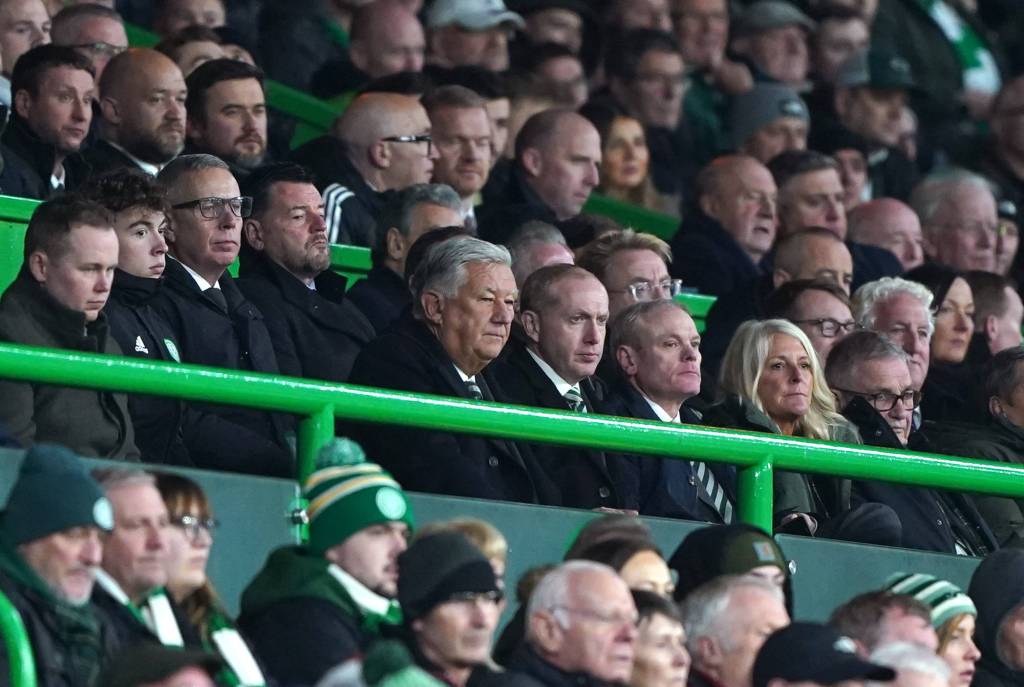
There are moments in a football club’s history when the problems are so layered, so interconnected, and so predictable that trying to pin the blame on one person feels almost childish. Celtic are in that moment now. The anger is not new, the warning signs are not new, and the sense of déjà vu is certainly not new. What is new is the sheer scale of the collapse, and the fact that so many things can be true at the same time.
Yes, Wilfried Nancy is failing. Yes, he should have been sacked weeks ago. Yes, the football is unwatchable, the results are unacceptable, and the trajectory is terrifying. However, he is not the root cause. He is the latest symptom of a club that has been rotting from the top down for years.
This crisis did not begin today. It did not begin at Fir Park, or Tannadice, or even at the cup final. It began in the COVID season, when the club’s complacency, lack of ambition, and structural dysfunction were laid bare. Celtic have been drifting ever since, and now the drift has turned into a nosedive.
The truth is simple: Celtic are where they are because the people running the club have allowed this to happen. And they have allowed it to happen for far too long.
The Board’s Long-Term Negligence and Structural Rot
If you want to understand Celtic’s current crisis, you start with the board. Not with Nancy, not with the players, not with the tactics. The board.
For years, Celtic have operated with a profit‑first mentality that has repeatedly weakened the squad. Transfer windows have become exercises in financial optimisation rather than football progression. The club has sold well, yes, but it has reinvested poorly. When you do that long enough, the cracks stop being cracks; they become the foundation.
The squad is full of players who should have been moved on years ago. Players who have hit the end of their cycle, who have declined physically or mentally, who no longer fit the demands of modern football. Instead of refreshing the team, the board has allowed it to stagnate. Instead of evolving, Celtic have regressed.
And then there is Dermot Desmond, a man with disproportionate influence and no meaningful accountability. Modern football clubs do not operate like this anymore. They cannot. The game has moved on; Celtic have not.
Every manager who comes in hits the same ceiling, a ceiling created not by budget but by ambition. A ceiling enforced not by reality but by choice. The club refuses to modernise, refuses to invest strategically, refuses to build a structure that supports long‑term success. Instead, it relies on luck, sentimentality, and the hope that one good season will paper over the cracks.
The striker fiasco is the perfect example. Celtic went into yesterday’s derby without a new striker, a situation so absurd, so negligent, and so utterly avoidable that it borders on scandalous. No elite club behaves like this. No ambitious club behaves like this. Only a club that has lost its way behaves like this.
And the worst part is simple: none of this is surprising. You could see it coming a mile off.
The Nancy Experiment: Naivety, Stubbornness, and Collapse
Now, let us be clear: Nancy is not blameless. Far from it. His tenure has been a disaster, and the numbers speak for themselves:
- 6 defeats in 8
- 18 goals conceded
- A cup final loss to St Mirren
- A derby defeat at home
- Two chances to go top, both blown
- A slide from potential top spot to level with third
This is not a blip. This is not bad luck. This is managerial failure.
Nancy arrived with a clear idea of how he wanted to play, and that is admirable. However, he tried to implement a complex, high‑risk style with a squad that was nowhere near capable of executing it. He was not pragmatic. He was not patient. He did not adapt. He did not wait until he had the players. He simply charged ahead, and the results have been catastrophic.
He should have been gone after the cup final.
He should have been gone after Tannadice.
He absolutely should have been gone after Fir Park.
Instead, he survived each humiliation. Not because he earned the right to stay, but because the board refused to act. They would not back him, but they would not sack him either. They left him hanging, left the squad confused, left the fans furious, and left the season drifting into chaos.
Today was just another embarrassment, another chapter in a story that should have ended weeks ago.
Nancy is the worst Celtic manager of the modern era; however, he is still only a symptom. The disease is above him.
The Ange Illusion: How Luck Masked Structural Failure
The board’s defenders often point to Ange Postecoglou as proof that the club’s model works. That argument collapses under the slightest scrutiny.
Celtic did not build a system that produced Ange’s success. Celtic got lucky that Ange was the system.
He identified and signed players who were miles above their price point: Kyogo, Matt O’Riley, Reo Hatate, Liel Abada, Jota, Giakoumakis, Josip Juranović. These were not flukes; they were the product of a manager with a clear eye for talent, a global network, and a tactical identity that elevated players. Ange did not succeed because the board backed him. He succeeded in spite of them.
When he left, the club did not have a structure to replace him. No recruitment model, no succession plan, no football department capable of sustaining his standards. The cracks that Ange papered over reappeared instantly, and this time they were wider.
The board mistook Ange’s brilliance for their own competence, and Celtic are paying the price.
A Season on the Brink, and Still Salvageable
Here is the maddening part: the season is still salvageable.
Despite everything, the chaos, the incompetence, the tactical confusion, the missed opportunities, Celtic are still within touching distance. The league has not been lost yet. The title race is not over.
However, it will be if the club continues on this path.
With a qualified manager and three or four quality signings, Celtic could still mount a challenge. The squad is not hopeless; it is simply mismanaged, undercoached, and psychologically battered. A reset could change everything.
Keep Nancy, and Celtic could easily finish third or fourth. That is not hyperbole. That is not panic. That is the trajectory.
The club is standing at a crossroads. One path leads to recovery; the other leads to mediocrity. Right now, Celtic are walking down the wrong one.
Conclusion: Sack Nancy, but Fix the Real Problem
Wilfried Nancy needs to go. That much is obvious. His record is indefensible, his tactics are failing, and his tenure is unsalvageable.
However, sacking him will not fix Celtic.
Not unless the board changes. Not unless the club modernises. Not unless ambition replaces complacency. Not unless governance replaces ego. Not unless the people running Celtic finally accept that the game has moved on, and that Celtic must move with it.
This crisis did not happen overnight. It did not happen by accident. It happened because the club allowed it to happen.
Many things can be true at once.
Nancy is failing.
The players are not good enough.
The squad is stale.
The recruitment is broken.
The football is dire.
However, the biggest truth of all is this:
Celtic’s real problem is the board, and until that changes, nothing else will.
Oh, and Rod Stewart can get tae fuck, too!


Leave a Reply