Celtic Football Club has always been a giant in Scottish football, a club with a fanbase that dwarfs its domestic rivals, a financial structure that should allow it to dominate, and a history that demands ambition. Yet in recent years, the club has drifted. Not because the players suddenly became weaker, not because the supporters lost belief, and not because the club’s resources dried up. The drift has come from the top, from a leadership group that has mistaken inherited advantages for strategic brilliance.
The uncomfortable truth is that Celtic have been winning domestically because the competition has been weak, not because the club has been run with vision or competence. The board has dined out on trophies that were delivered by structural superiority, not by executive excellence. And nowhere is this more evident than in the tenure of CEO Michael Nicholson.
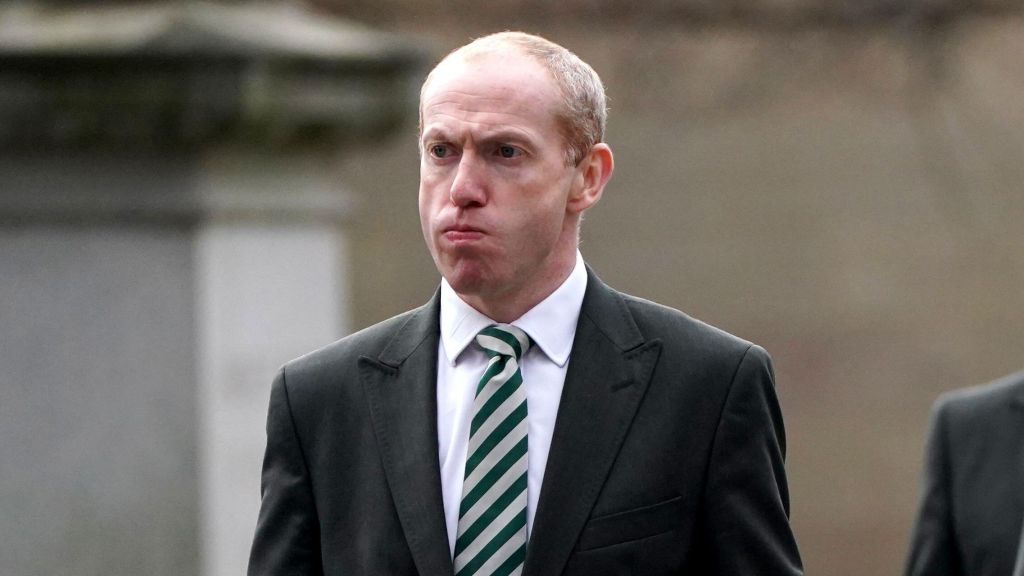
Nicholson’s time in charge has been defined by a lack of presence, a lack of ambition, and a lack of any coherent plan for the future. He was appointed without a track record, without experience in football operations, and without the qualities required to lead a club of Celtic’s size. What followed has been a series of failures that have weakened the club on and off the pitch.
This blog examines how Celtic arrived at this point, why Nicholson’s leadership has been so damaging, and how the legacy of Peter Lawwell created a culture that allowed mediocrity to flourish. It also looks at the staggering financial and sporting cost of repeated failures in Europe, failures that have cost the club over £100m in lost revenue.
Celtic’s recent success has come in spite of its leadership, not because of it. And unless the club confronts this reality, the drift will continue.
The making of a failed CEO: How a club lawyer became the wrong appointment
When Celtic appointed Michael Nicholson as CEO, the reaction among supporters was not excitement or optimism. It was confusion. Nicholson had been a club lawyer, a background that may be useful in contract work but offers nothing in terms of football strategy, recruitment, negotiation, or long term planning. He had never run a football club, never overseen a recruitment department, never built a squad, and never demonstrated the leadership qualities required to guide a club with Celtic’s expectations.
Yet he was handed the keys to the entire operation.
The appointment felt like a continuation of a long standing pattern at Celtic, a pattern where internal loyalty is valued more than competence, where familiarity is prioritised over expertise, and where the boardroom remains a closed circle. Nicholson was not hired because he was the best candidate. He was hired because he was already in the building.
From the beginning, the warning signs were obvious. A novice CEO with no track record was suddenly responsible for transfer strategy, squad planning, and the overall direction of the club. He was paired with CFO Chris McKay, another figure with limited football experience, and together they stumbled from one crisis to the next.
The lack of experience translated directly into poor decision making. Transfer windows became chaotic. Negotiations were mishandled. Key positions were left unfilled. The club lurched from one short term fix to another, never building a coherent plan for the future.
Celtic needed a modern, forward thinking CEO with a clear vision for recruitment, development, and European competitiveness. Instead, they appointed someone whose background offered none of those qualities. The result was predictable. The club regressed.
Nicholson’s tenure has been defined by reactive leadership. Problems are addressed only after they become crises. Opportunities are missed because the club is unprepared. Decisions are made without strategy, without foresight, and without an understanding of the modern football landscape.
The CEO of Celtic should be a figure who inspires confidence, someone who sets the tone for ambition and excellence. Nicholson has been the opposite. His leadership has been passive, uncertain, and lacking in authority. And the consequences have been severe.
Transfer windows of chaos
If there is one area where a CEO’s competence is most visible, it is the transfer market. Recruitment is the lifeblood of any football club. It determines the quality of the squad, the style of play, the long term trajectory, and the ability to compete domestically and in Europe.
Under Michael Nicholson, Celtic’s transfer windows have been nothing short of disastrous.
Three consecutive failed windows
Celtic have endured three failed transfer windows in a row, each one exposing the same structural weaknesses. There has been no coherent recruitment strategy, no clear identification of targets, and no urgency in addressing obvious squad deficiencies.
Positions that required reinforcement were ignored. Players who were essential to the system were not replaced. The club repeatedly entered crucial fixtures underprepared, short handed, and lacking quality in key areas.
A modern football club cannot operate this way. Successful clubs plan windows months in advance. They identify targets early, negotiate efficiently, and ensure the squad is ready before the season begins. Celtic, under Nicholson, have done the opposite.
The Engels, Trusty and Idah overpayments
One of the clearest examples of poor negotiation came in the window where Celtic overpaid for Arne Engels, Auston Trusty and Adam Idah. These were not strategic signings.
The Idah situation in particular was a damning indictment of Nicholson’s competence. When Celtic brought him in on loan, Norwich had already been negotiating with Hellas Verona on a deal that included an option to buy for £3.5m. Celtic, despite having the same opportunity, secured no option at all.
The result was predictable. Idah performed well, his value increased, and Celtic were left with no leverage. A competent CEO would have ensured an option was included. Nicholson did not. The club paid the price.
The ripple effect of poor relationships
Transfer negotiations do not happen in isolation. They rely on relationships with agents, clubs, and intermediaries. Under Nicholson, many of these relationships have deteriorated.
Agents have grown frustrated with Celtic’s slow processes, poor communication, and lack of clarity. Clubs have become wary of dealing with a leadership team that appears indecisive and unprepared. These damaged relationships make future negotiations more difficult, more expensive, and less likely to succeed.
A CEO must protect and cultivate these relationships. Nicholson has allowed them to erode.
The cumulative cost
The cumulative effect of these failures is a squad that has regressed. Celtic have spent money without improving the team. They have missed out on key targets. They have entered crucial fixtures without the necessary quality.
The transfer market is where a club’s ambition is most visible. Under Nicholson, Celtic’s ambition has been non existent.
A catalogue of off-field failures: Decisions that weakened the club
Nicholson’s failures extend far beyond recruitment. His tenure has been marked by a series of off field decisions that have destabilised the club and undermined its progress.
He had oversight of Paul Tisdale’s appointment, a decision that raised eyebrows across the support. He failed to replace Kyogo or Nicolas Kuhn at critical moments, leaving the squad short of firepower. He presided over the embarrassing loss to Kairat in Champions League qualifying, a defeat that stemmed from poor preparation and a lack of urgency.
He banned ultras and fan media, creating unnecessary division within the support. He oversaw Brendan Rodgers’ messy departure, a situation that should have been handled with far more professionalism. He allowed Martin O’Neill to leave before three crucial fixtures, a decision that baffled supporters and weakened the team at a pivotal moment.
Then there was the Wilfried Nancy debacle, a moment that symbolised the wider dysfunction within the club. It was another example of poor planning, poor communication, and poor leadership.
These are not isolated incidents. They form a pattern. A pattern of mismanagement, indecision, and a failure to understand the importance of unity, preparation, and professionalism.
A CEO must provide stability. Nicholson has provided instability. A CEO must anticipate problems. Nicholson has reacted to them only after they become crises. A CEO must protect the club’s interests. Nicholson has repeatedly exposed them.
The Lawwell Legacy: Inherited advantages and the myth of executive genius
To understand how Celtic arrived at this point, it is necessary to examine the legacy of Peter Lawwell. Lawwell created a culture in which the CEO was seen as a central figure, someone whose influence was comparable to that of the players and the manager. This belief was misguided, yet it became deeply embedded within the club.
The myth of the all powerful CEO
Lawwell cultivated the idea that the CEO was a strategic mastermind, someone whose decisions were responsible for Celtic’s success. This belief was not only inaccurate, it was damaging. It created a culture of executive narcissism, a culture in which the board believed it was the architect of success rather than the beneficiary of structural advantages.
Nicholson inherited this culture. He stepped into a role that had been inflated in importance, yet he lacked the qualities required to justify that importance.
Domestic dominance as a smokescreen
Celtic’s domestic dominance has long been used as evidence of strong leadership. In reality, it has been a smokescreen. The club has enjoyed financial and structural advantages that no other Scottish club can match. These advantages were not created by Lawwell. They were inherited.
The board dined out on trophies that were delivered by resources, not by strategy. They convinced themselves that domestic success equated to good governance. It did not.
The European record
The true measure of Celtic’s leadership is not domestic trophies. It is European performance. And on that front, the record is damning.
Celtic have failed to win 7 of their last 9 Champions League qualifiers. They have repeatedly entered these qualifiers underprepared, understrength, and lacking in quality. This is not bad luck. It is bad planning.
The financial cost of these failures is staggering. The club has lost over £100m in potential revenue due to repeated failures to reach the Champions League group stage. That money could have transformed the squad, improved infrastructure, and elevated the club’s long term prospects.
Instead, it was lost because the club was criminally underprepared.
The absence of lasting foundations
For all the talk of Lawwell’s legacy, what lasting foundations did he build? What structural advantages did he introduce that will benefit the club in the future?
The recruitment model remains outdated. The European strategy remains non existent. The club’s infrastructure has not evolved to match modern standards. The academy has not produced a steady stream of first team talent.
Lawwell inherited advantages. He did not create them. Nicholson inherited the same advantages, yet he has allowed them to erode.
A club at a crossroads and why change is no longer optional
Celtic stand at a crossroads. The club can continue down the path of complacency, a path defined by weak leadership, poor planning, and a belief that domestic trophies are enough. Or it can confront the reality that its current leadership is not fit for purpose.
Michael Nicholson’s tenure as CEO has been an unmitigated disaster. He has failed in recruitment, failed in preparation, failed in communication, and failed in leadership. The club has succeeded in spite of him, not because of him.
Celtic need a modern, ambitious CEO. Someone with vision, authority, and a clear plan for European competitiveness. Someone who understands the modern football landscape. Someone who can rebuild relationships, restore professionalism, and set the club on a path toward long term success.
The cost of inaction will be far greater than the cost of change. Celtic cannot afford to drift any further. The time for new leadership is now.


Leave a Reply