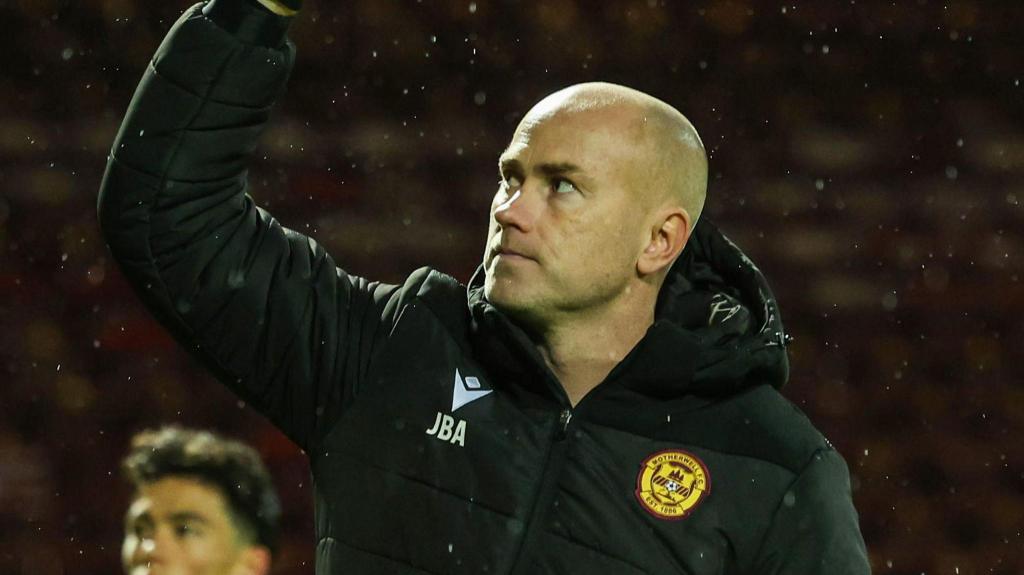
There are moments in the life of a football club when the air seems to thicken, when the old rhythms no longer soothe, when the familiar patterns of dominance begin to fray at the edges. Celtic stand in such a moment now, caught between the memory of a vibrant, high tempo identity and the reality of a team that has drifted from its own heartbeat. The club needs more than a manager, it needs a renewal of purpose, a rekindling of fire, a return to the clarity that once made Celtic Park feel like the centre of a footballing universe.
In this search for renewal, one name rises with the quiet inevitability of a sunrise. Jens Berthel Askou, the Danish architect of Motherwell’s transformation, a coach whose ideas shimmer with modernity and whose teams move with the conviction of a side that knows exactly what it is meant to be. He is not the loudest candidate, nor the most decorated, but he is the one whose work speaks with the clearest voice. His football is not built on slogans or nostalgia, it is built on structure, bravery, and a belief that the game rewards those who dare to shape it rather than react to it.
Celtic do not need a celebrity appointment, they need a builder of systems, a cultivator of talent, a leader who can take a squad that has lost its way and teach it to breathe again. Askou is that leader. His rise has been steady, deliberate, and deeply impressive. He has taken Motherwell, a club with modest means, and turned them into one of the most tactically coherent sides in Scotland. He has done it with clarity, with innovation, and with a philosophy that aligns almost perfectly with what Celtic supporters crave.
This is the case for Jens Berthel Askou, not as a gamble, but as the most compelling choice for Celtic’s next permanent manager.
A Tactical Blueprint That Mirrors Celtic’s Soul
Askou’s football is a study in controlled aggression, a symphony of structure and spontaneity. His teams play with the ball as if it were a trusted companion, not a burden to be hurriedly released. Motherwell have averaged close to sixty percent possession under his guidance, a staggering figure for a club that traditionally fights for survival rather than dominance. This is not sterile possession, it is purposeful, vertical, and designed to manipulate space until the opposition’s shape begins to buckle.
His preferred shapes, the 4-2-3-1 and the asymmetric 4-2-2-2, are not rigid formations but living organisms. They breathe, they rotate, they overload, they create passing triangles that stretch and compress the pitch in hypnotic waves. Wide forwards pin fullbacks, midfielders drift into half spaces, centre backs step into midfield with the calm authority of players who know exactly where their next option lies. It is football that feels familiar to Celtic supporters who remember the fluidity of Ange Postecoglou’s best days, yet it is also more structured, more detailed, more adaptable.
One of Askou’s most fascinating innovations is his No Contest rule for aerial duels. In a league where long balls rain from the sky like winter hail, he instructs his defenders not to challenge the first contact. Instead, they shepherd the striker under the ball, allowing it to bounce into a zone where a teammate can sweep up and initiate controlled possession. It is a small detail, but it reveals a mind that sees the game not as chaos to be endured, but as a puzzle to be solved.
Then there is the counter press, the heartbeat of his philosophy. Askou demands aggression, not passivity, in the moments after possession is lost. His teams swarm, they hunt, they suffocate. They are among the best in Europe for immediate ball recoveries, a statistic that should make Celtic supporters sit up with a jolt of recognition. This is the identity the club has been missing, the ferocity that once made Celtic Park feel like a furnace.
Behind all of this lies his football bible, a three hundred slide game model that details every phase of play with the precision of a master craftsman. From defending goal kicks to attacking against ten men, from pressing triggers to build up patterns, nothing is left to chance. Celtic have lacked this level of detail since Brendan Rodgers’ first spell. Askou would restore it with a clarity that would ripple through every training session and every matchday.
The Alchemist: How Askou Turns Players Into Gold
If tactics are the skeleton of Askou’s philosophy, player development is its beating heart. His gift is not merely to organise a team, but to awaken something dormant within players who had long been dismissed as ordinary. Under his guidance, careers have been revived, ceilings have been shattered, and players once seen as functional have begun to play with a flourish that borders on the poetic.
Look first to Tawanda Maswanhise, the winger who has become Motherwell’s most persistent source of danger. In a side that often begins without a traditional striker, he has carried the attacking burden with a fearlessness that feels sculpted rather than spontaneous. His movement is sharper, his decision making more refined, his finishing more composed. Askou has turned him from a raw, unpredictable runner into a multi layered threat who bends defensive lines with every surge. He is the embodiment of a coach who teaches players not just where to run, but why to run.
Then there is the midfield, the engine room where Askou’s fingerprints are most visible. Callum Slattery, once a player whose career seemed to oscillate between promise and frustration, now plays with a maturity and authority that anchors the entire side. His passing has become cleaner, his positioning more intelligent, his leadership more pronounced. He looks like a player who finally understands his own importance.
Alongside him, Elliott Watt has emerged as one of the most intriguing midfielders in the league. His ability to dictate tempo, recycle possession, and glide between phases has drawn comparisons to the kind of metronomic presence Celtic have lacked since their midfield was reshaped. Under Askou, Watt has become a conductor, a player who keeps the game breathing in the rhythm his manager demands. His improvement is not accidental, it is engineered.
And then there is Lukas Fadinger, a player who arrived with little fanfare but has grown into a dynamic, all action presence. His energy, his press resistance, his ability to break lines with both passes and carries, all of it has flourished under Askou’s meticulous guidance. He has become a midfielder who plays with both elegance and edge, a combination that rarely emerges without a manager who knows how to nurture it.
The defensive transformation is perhaps the most striking of all. Stephen O’Donnell and Paul McGinn, two veterans whose best years many believed were behind them, are now playing the finest football of their careers. They look reborn, sharper in duels, cleaner in possession, more assured in their decision making. Askou has given them structure, clarity, and a system that amplifies their strengths rather than exposing their limitations.
Even Stephen Welsh, on loan and searching for stability, has found a platform to rebuild his confidence. Under Askou, he has looked composed, proactive, and tactically disciplined, a defender who finally appears to be playing with the freedom of someone who trusts the plan around him.
Behind them all stands Calum Ward, a goalkeeper who has blossomed into one of the most reliable shot stoppers in the league. His command of the box has improved, his distribution has sharpened, and his presence has grown into something authoritative. Askou has not just improved him, he has elevated him into a cornerstone of Motherwell’s defensive resurgence.
This is the essence of Askou’s alchemy. He does not simply select players, he shapes them. He does not rely on marquee signings, he creates value from within. He teaches, he refines, he empowers. He builds players from the inside out.
Now imagine what he could do with Celtic’s squad. Reo Hatate would find new dimensions in a midfield that encourages fluidity and risk taking. Daizen Maeda, a relentless presser, would become the perfect trigger for Askou’s counter pressing schemes. Creative players who have drifted in and out of form would find clarity in a system that gives them defined roles and unwavering support. Young talents would be nurtured, not neglected. Established players would be sharpened, not stagnated.
Celtic’s model depends on developing talent, selling at peak value, and reinvesting wisely. Askou is a manager who turns potential into performance, and performance into profit. He is an alchemist, and Celtic possess the raw materials he could transform into something extraordinary.
A Master of Adaptation: Big Games, Big Ideas
What separates good managers from great ones is not just philosophy, but adaptability. Askou has shown repeatedly that he can read a match like a seasoned novelist reads a page, sensing the shifts in momentum, the subtle changes in shape, the weaknesses waiting to be exploited.
His most famous example came in a victory over Celtic, Motherwell’s first in a decade. He abandoned his usual shape, shifted to a 4-3-3, and instructed his midfield to suffocate the supply line to Celtic’s deep lying playmaker. The plan worked with surgical precision. Celtic were blunted, frustrated, and eventually undone by a team that executed its instructions with total conviction.
This was not a one off. Askou has gone unbeaten in long stretches, including a thirteen match run that forced top six clubs to alter their approach against Motherwell. He has drawn multiple times with Rangers and Hearts, showing that his ideas hold firm against the strongest sides in the league. He does not freeze under pressure, he thrives in it.
Celtic’s European struggles have often stemmed from managers who either refused to adapt or adapted too late. Askou adapts before the problem becomes a crisis. He is proactive, not reactive. He is a strategist, not a dreamer. He is exactly the kind of manager Celtic need if they are to step back onto the European stage with credibility.
A Culture of Courage: The Blame Free Environment Celtic Crave
Football is not just tactics and talent, it is psychology, atmosphere, belief. Askou understands this deeply. He has built a culture at Motherwell that rejects blame and embraces bravery. Players are encouraged to take risks, to express themselves, to make mistakes without fear of retribution. This has created a team that plays with composure even when pressed, a team that does not crumble under pressure, a team that trusts its manager and each other.
Celtic’s dressing room has felt fragile in recent seasons. Confidence has wavered, performances have dipped, and the weight of expectation has sometimes felt suffocating. Askou’s leadership style would be a breath of fresh air. He is calm, articulate, and humble. He communicates with clarity and empathy. He builds trust quickly, and he sustains it through consistency and honesty.
A blame free environment does not mean a lack of standards. It means standards enforced through teaching rather than punishment, through clarity rather than fear. Celtic need this. Their players need this. Their future depends on this.
The Moment Is Now: Celtic Must Not Hesitate
Askou’s rise has not gone unnoticed. Clubs across Europe are monitoring him, intrigued by his ideas and impressed by his results. He has spoken openly about his ambition, about his desire to test himself at a higher level, about his belief that his methods can succeed on a bigger stage.
Celtic offer that stage. They offer the resources, the platform, the history, and the expectation that can elevate a talented coach into a great one. But opportunities like this do not linger. They must be seized.
Celtic stand at a crossroads. They can choose the familiar path, the safe appointment, the comfortable option that so often leads to stagnation. Or they can choose the path that leads forward, the path that embraces innovation, the path that aligns with the modern game and the club’s own identity.
Jens Berthel Askou is not just a candidate. He is a vision of what Celtic could become. A team that presses with ferocity, that plays with courage, that dominates with structure, that develops talent with care, that competes in Europe with intelligence and belief.
He is the future of coaching in Scotland. Celtic can either lead that future or watch another club benefit from it.
The moment is here. The choice is clear. The future is waiting.


Leave a comment