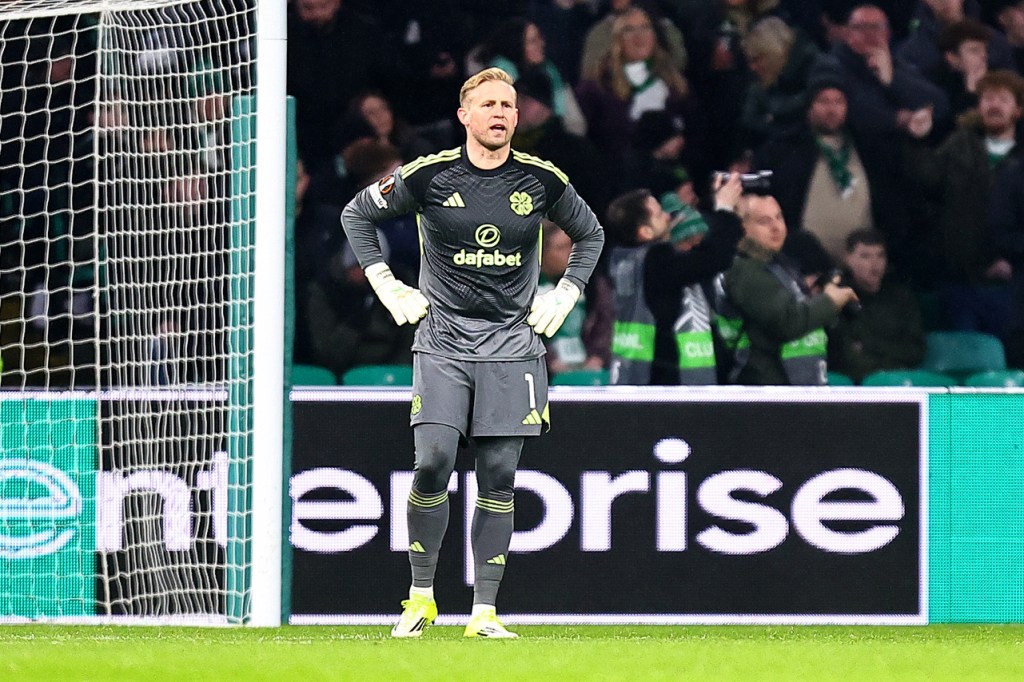
Celtic’s 2025/26 season has become a case study in how structural instability at the top of a football club filters down into tactical inconsistency, recruitment drift and ultimately European underperformance. The club has moved from Brendan Rodgers to Martin O’Neill on an interim basis, then to Wilfried Nancy on a short lived permanent appointment, and back to O’Neill again before the season has even reached its conclusion. This level of churn is not just unusual for Celtic, it is unprecedented in the modern era.
At the same time, the team’s statistical profile has continued to show the same patterns that have defined recent European campaigns. Strong domestic possession numbers, high shot volume, and territorial dominance in the Premiership, but a steep drop in control, chance creation and defensive stability when facing higher calibre opponents. The Celtic Way’s benchmarking analysis highlighted this gap clearly, noting that Celtic’s metrics in Europe consistently fall below the levels seen in comparable mid tier clubs who regularly progress from group stages.
The central argument of this article is straightforward. Celtic cannot evolve into a European ready club until they stabilise leadership and identity. The squad is not built for European football, the tactical model has shifted multiple times in a single season, and recruitment has lacked a coherent profile driven strategy. To understand what Celtic need to become, we first need to understand what they currently are, and why the gap persists.
The structural gap: how instability at the top has shaped Celtic’s European shortcomings
The most important factor in Celtic’s European stagnation is not a single player, a single tactical flaw or a single bad result. It is the absence of a stable, long term football identity. The club has moved from Ange Postecoglou’s high tempo, aggressive, vertical football to Rodgers’ slower, more controlled positional play, then to Nancy’s hybrid possession model, and now back to O’Neill’s pragmatic, transitional approach. Each shift has required different player profiles, different physical demands and different tactical automatisms.
This instability has created several measurable problems.
A squad built for multiple systems but optimised for none
Across the last four seasons, Celtic’s recruitment has produced a squad with mismatched attributes. There are players suited to high pressing, players suited to slow circulation, players suited to inverted full back structures, and players suited to wide, direct football. The Celtic Way’s analysis of the Nancy period highlighted this clearly. Nancy attempted to implement a more fluid, positional system, but the squad lacked the press resistant midfielders and the athletic full backs required to execute it. The result was a team caught between ideas, neither secure in build up nor dangerous in transition.
Declining European metrics despite domestic dominance
FBref data across multiple seasons shows a consistent pattern.
- Celtic’s domestic possession numbers remain high, often above 65 percent.
- Their shot volume remains among the highest in the league.
- Their expected goals for is strong in Scotland, but drops significantly in Europe.
- Their expected goals against increases sharply in European matches, particularly from transition situations.
This is not a coincidence. It is the product of a squad that is trained and built for one type of football, then asked to perform a different type of football against stronger opponents.
Managerial churn has prevented tactical consolidation
The most damaging consequence of Celtic’s recent instability is the absence of any sustained tactical consolidation. Each managerial change has reset the team’s reference points, altered the training emphasis and shifted the demands placed on key positions. Instead of building season on season towards a coherent European identity, Celtic have spent the last year repeatedly recalibrating.
Rodgers’ departure removed a possession based framework that, while imperfect, at least had clear structural principles. Nancy’s arrival introduced a different interpretation of positional play, one that required a higher level of press resistance in midfield and more fluid rotations in the attacking third. The squad was not built for that shift, and the adjustment period was cut short by his dismissal. O’Neill’s return has brought a more pragmatic, vertically oriented approach that has stabilised performances, but it is inherently short term and does not provide a long horizon for squad building.
The result is a team that has been asked to execute three distinct footballing models in a single season. That level of tactical turbulence has predictable effects.
Automatisms never form
European football exposes teams whose patterns are not deeply embedded. Pressing triggers, rest defence structures, build up rotations and transitional reactions all rely on repetition. Celtic have not had the continuity required to ingrain these behaviours. Instead, players have been adapting to new instructions every few months, which leads to hesitation in high pressure moments.
Recruitment becomes reactive rather than strategic
Without a stable identity, recruitment loses its anchor. Players signed for Rodgers’ slower, more controlled system do not necessarily fit Nancy’s more fluid, positional approach. Players who suit O’Neill’s transitional game may not suit the next permanent manager. This creates a squad with mismatched attributes, where certain profiles are duplicated and others are missing entirely.
Physical preparation shifts with each regime
Different tactical models require different physical outputs. A high pressing system demands repeat sprint capacity. A possession heavy model demands endurance and sharp accelerations in tight spaces. A transitional model demands power and recovery speed. Celtic’s players have been asked to oscillate between these demands without a consistent long term conditioning plan, which affects both performance and injury risk
Recruitment has lacked a coherent profile driven strategy
Without a stable identity, recruitment becomes reactive. Celtic have signed players for Rodgers’ system, then players for Nancy’s system, and now O’Neill is working with a squad that does not fully suit his approach either. The result is a roster with gaps in key European profiles.
- No true press resistant number 6.
- No peak age, high energy number 8 who can carry the ball through pressure.
- No centre back pairing with both recovery pace and ball progression.
- Inconsistent winger output.
- A striker department that lacks a complete European profile.
This is not a coincidence. It is the predictable outcome of leadership instability.
If Celtic want to evolve, they need to define a tactical identity that will last beyond a single manager. Only then can they build a squad that is structurally suited to European football.
The tactical identity Celtic need for Europe, and why instability has prevented it
European football demands a specific set of tactical qualities. Teams that consistently progress from group stages, even without elite budgets, share several traits. They are comfortable under pressure, they can defend transitions, they can press in coordinated phases, and they have enough athleticism to match the tempo of continental football.
Celtic have shown flashes of these qualities under different managers, but never all at once, and never for long enough to build a stable identity.
Press resistance and controlled build up
Under Rodgers, Celtic attempted to build from the back with patience and structure. The problem was that the squad lacked the press resistant midfielders and the ball playing centre backs required to execute this against European opponents. Celtic’s turnover rate under pressure was significantly higher in Europe than in domestic matches. This is a structural issue, not a coaching one.
Transition defence and athletic coverage
Under Nancy, Celtic attempted to play a more fluid, positional game, but the team became even more vulnerable in transition. Analysis of Nancy’s tenure highlighted how often Celtic were caught with too many players ahead of the ball, without the athletic midfielders required to recover. This is a profile issue. Without a high energy number 8 and a true defensive midfielder, Celtic cannot defend transitions at European tempo.
Verticality and speed in attack
Under O’Neill, Celtic have regained some verticality. Aanalysis of his first match back noted how the team played forward quicker, used the wide areas more aggressively and created higher quality chances. This is closer to what Celtic need in Europe, but it is still a short term adaptation, not a long term identity.
Tactical adaptability
European football requires the ability to shift between pressing high, defending compact and attacking quickly. Celtic have shown each of these traits under different managers, but never all under one manager for long enough to embed them.
The conclusion is clear. Celtic need a stable identity that blends controlled possession with vertical transitions, coordinated pressing with compact defending, and technical security with athleticism. This identity cannot be built while the club is changing managers every few months.
The profiles Celtic must recruit to build a European ready squad
To build a squad that can execute a stable European identity, Celtic need to recruit specific profiles. These profiles are not optional. They are structural requirements for modern European football.
Goalkeeper
Celtic need a goalkeeper who can:
- Receive under pressure.
- Play short and medium range passes accurately.
- Sweep aggressively behind a high line.
- Command the box on crosses and set pieces.
This profile is essential for controlled build up and for defending transitions. Without it, Celtic will continue to struggle to play out from the back in Europe.
Centre backs
Celtic need a pairing with complementary traits.
- One defender with recovery pace, aggression in duels and the ability to defend large spaces.
- One defender with composure in build up, line breaking passing and strong positional sense.
The Celtic Way’s benchmarking analysis showed that Celtic concede a disproportionate number of chances in Europe from transitional situations and from central overloads. This is a direct consequence of lacking the right centre back profiles
Full backs
Modern European full backs must be:
- Press resistant.
- Athletic enough to recover 30 to 40 metres repeatedly.
- Capable of carrying the ball forward to break pressure.
- Disciplined in defensive transitions.
Celtic’s current full back group has technical quality, but lacks consistent athleticism and carrying threat. This limits both build up and transition defence.
Midfield
This is the most important area for Celtic’s evolution.
A true number 6
Celtic need a defensive midfielder who can:
- Receive under pressure.
- Play forward quickly.
- Screen the back four.
- Win duels consistently.
Without this profile, Celtic will always be vulnerable in Europe.
A high energy number 8
Celtic need a midfielder who can:
- Cover large distances.
- Press aggressively.
- Carry the ball through pressure.
- Arrive in the box.
This profile is essential for both transitions and chance creation.
A creative tight space operator
Celtic need a midfielder who can:
- Receive between the lines.
- Turn under pressure.
- Play the final pass.
This profile is essential for breaking down compact European blocks
Wingers
Celtic need wide players who offer:
- Pace.
- One versus one threat.
- End product.
The Celtic Way’s analysis of Sebastian Tounekti highlighted how his profile, with pace, directness and verticality, could elevate Celtic’s attack. This is the type of winger Celtic need more of.
Striker
Celtic need a striker who can:
- Run in behind.
- Hold the ball up.
- Press aggressively.
- Finish consistently.
This profile is essential for European football, where chances are fewer and transitions are more important.
Why Celtic cannot build this squad without stabilising leadership and identity
Recruitment is not just about signing good players. It is about signing the right players for a specific tactical identity. Celtic cannot do this while changing managers every few months.
Tactical identity determines recruitment
If Celtic want to play controlled possession, they need press resistant midfielders and ball playing defenders. If they want to play vertical transitions, they need pace and power. If they want to press high, they need athletic forwards and midfielders.
Without a stable identity, recruitment becomes reactive and inconsistent.
Players need time to learn a system. Tactical automatisms take months to embed. Changing managers resets this process each time.
Clubs that succeed in Europe without elite budgets do so through long term planning. Celtic have not had that since Postecoglou left.
Players perform better when roles are clear and consistent. Celtic’s constant tactical shifts have created confusion and inconsistency.
The 18 month blueprint: how Celtic can stabilise identity and build a European ready squad
To evolve, Celtic need a clear plan that spans multiple windows.
Step 1: Appoint a long term manager with a defined tactical identity
This is the foundation. Celtic need a manager whose style aligns with modern European football, and they need to commit to that identity for multiple seasons.
Step 2: Build a profile driven recruitment model
Celtic need to define the profiles required for each position and recruit accordingly. This model must be independent of any single manager.
Step 3: Fix the spine in the next window
Celtic need to prioritise:
- Goalkeeper.
- Centre back.
- Number 6.
- Striker.
These positions are non negotiable.
Step 4: Add athleticism and depth in the second window
Celtic need:
- A high energy number 8.
- An athletic full back.
- A winger with pace and end product.
Step 5: Replace outgoing players with higher ceiling profiles in the third window
This is where Celtic can add younger players with potential, but only once the core is stable.
Step 6: Embed a European training model
Celtic need to train at European tempo, with more emphasis on transitions, pressing and compact defending.
Step 7: Create a stable leadership structure
Celtic need:
- A sporting director with authority.
- A recruitment team aligned with the tactical identity.
- A manager who fits the long term plan
Conclusion
Celtic’s European shortcomings are not the result of bad luck or isolated tactical errors. They are the predictable outcome of leadership instability, tactical inconsistency and profile mismatched recruitment. The club cannot evolve until it stabilises identity at the top. Once that happens, Celtic can build a squad that is structurally suited to European football, with the right profiles in the right positions and a tactical model that can withstand the demands of continental competition.
The next 18 months will determine whether Celtic remain a domestic heavyweight that struggles in Europe, or whether they become a club capable of competing consistently at a higher level. Stability is not a luxury. It is the foundation of everything Celtic want to become.


Leave a Reply