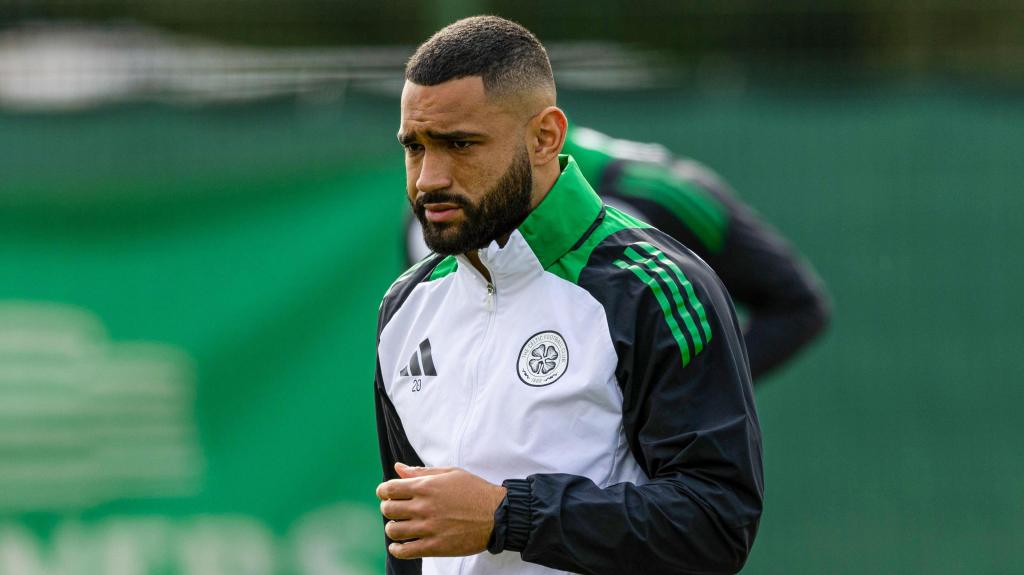
Celtic’s 2025/26 campaign will be remembered for many things, managerial upheaval, tactical reinventions, a title race that veered between hope and despair, but above all, it will be remembered for injuries. Not the usual handful of strains and knocks that every club absorbs, but a season long cascade of absences that hollowed out the spine of the team, destabilised the dressing room, and forced managers into constant improvisation.
By April, the numbers were stark: multiple long term injuries, repeated setbacks, and a squad stretched so thin that key fixtures were approached with patched together line ups. The consequences were visible in dropped points, disrupted chemistry, and a team that too often looked like it was surviving rather than competing.
This is the story of how injuries reshaped Celtic’s season, not as an excuse, but as a defining structural reality
The Defensive Collapse: Carter Vickers, Johnston and the Unravelling of Stability
Every successful Celtic side of the past decade has been built on defensive continuity. This season, that foundation crumbled almost immediately, and the ripple effects were felt in every competition.
Cameron Carter Vickers: The Irreplaceable Absence
Carter Vickers’ Achilles rupture in late October was the moment the season’s trajectory shifted. Losing the defensive leader for the entire campaign removed Celtic’s most reliable organiser, their strongest aerial presence, and their most dependable one v one defender.
His absence forced constant reshuffling: Liam Scales, Austin Trusty, Dane Murray, and even emergency options were rotated through the back line. None offered the same authority. The knock on effects were clear:
- Celtic conceded more goals from set pieces than in any season since 2018
- Opponents targeted the right half space, an area Carter Vickers typically locked down
- Build up play slowed without his composure under pressure
The 0–0 draw at Ibrox in August hinted at a solid defensive base, but by the time Celtic returned to face Rangers later in the season, the back line was unrecognisable, and far more vulnerable.
Alistair Johnston: The Endless Hamstring Saga
Johnston’s hamstring injury, suffered in Europe, became a season long storyline. Initial optimism gave way to surgery, setbacks, and uncertainty. His absence removed Celtic’s most aggressive ball winning full back and a key transitional outlet.
Without him, Celtic’s right flank lost its balance, wingers were forced deeper to compensate, and opponents repeatedly exploited the space behind replacement full backs. The team’s pressing structure weakened, since Johnston is usually the trigger for wide pressure.
The 2–1 win over Dundee in early April, a match Celtic should have controlled, instead became a frantic, narrow escape, with the right side repeatedly exposed. Johnston’s absence did not just weaken the defence, it altered the entire tactical identity.
Colby Donovan and the Burden of Responsibility
One of the few bright spots was Colby Donovan, who stepped in with maturity beyond his years. But relying on a young defender to anchor a title chasing back line was never the plan. His late season scan concerns only deepened the sense of fragility.
The cumulative effect was simple: Celtic entered the post split run in with a defensive unit that had barely played together, lacking cohesion at the exact moment when stability was essential.
Midfield Disruption: Engels, McGregor, Hatate and the Loss of Control
If the defence suffered from absences, the midfield suffered from disconnection. Celtic’s midfield has long been the engine of their dominance, dictating tempo, recycling possession, and sustaining pressure. This season, that engine sputtered.
Arne Engels: The Missing Conductor
Engels’ thigh injury removed Celtic’s most progressive midfielder for a critical stretch. His absence was felt most in matches where Celtic struggled to impose themselves, games that previously would have been controlled through his passing range and ability to break lines.
Without Engels, Celtic’s possession became slower and more predictable, transitions from defence to attack were laboured, and opponents pressed higher with confidence that Celtic lacked a reliable outlet.
The narrow win over Dundee highlighted this, Celtic created fewer high quality chances and relied on individual moments rather than sustained dominance.
Callum McGregor: The Captain’s Void
McGregor’s calf injury in December was another major blow. Even when not at his peak, McGregor provides rhythm, leadership, and positional intelligence. His absence forced Celtic into unfamiliar midfield combinations, often pairing inexperienced players with inconsistent performers.
The midfield’s lack of continuity contributed to a drop in chance creation metrics, increased turnovers in central areas, and a reliance on wide play rather than central progression.
Reo Hatate: Playing Through Pain
Hatate’s season was defined by physical strain. He played through discomfort in key fixtures, including a crucial derby where his resilience kept Celtic competitive. But the cumulative toll was evident, reduced mobility, fewer defensive actions, and less influence in the final third.
The midfield trio that once defined Celtic’s identity, McGregor, Hatate, and Engels, barely played together. The result was a team constantly searching for balance and rarely finding it.
The Forward Line Fallout: Iheanacho, Jota and the Vanishing Threat
Celtic’s attack entered the season with promise: pace, creativity, and a new focal point in Kelechi Iheanacho. Injuries dismantled that vision.
Kelechi Iheanacho: The Stop Start Striker
Iheanacho’s hamstring issues were a recurring theme. When fit, he delivered, his late penalty against Kilmarnock was a season defining moment that kept Celtic alive in the title race. But those moments were too infrequent.
His absences forced Celtic to rely on makeshift solutions: wingers played centrally, young forwards were thrust into high pressure roles, and the team lacked a consistent penalty box presence.
The psychological toll on Iheanacho was also significant. He spoke openly about the mental strain of being sidelined, a reminder that injuries affect more than just tactics.
Jota: The Creative Void
Jota’s ACL recovery was one of the season’s most painful storylines. Hopes of a late season return evaporated after further surgery. Without him, Celtic lost their most unpredictable dribbler, a reliable source of goals from wide areas, and a player capable of unlocking low blocks.
Matches against deep defending sides, Livingston, Dundee United, Falkirk, became far more laboured without Jota’s ability to destabilise defences.
Daizen Maeda and Benjamin Nygren: Carrying the Load
Maeda’s relentless work rate and Nygren’s goals kept Celtic afloat, but both were overburdened. Nygren, the club’s top scorer, often played through fatigue, while Maeda was asked to cover extraordinary defensive ground due to the instability behind him.
The forward line never settled. Injuries forced constant reshaping, and Celtic’s attacking metrics, shots, xG, entries into the box, all dipped compared to previous seasons.
Tactical Consequences: A Team Forced Into Survival Mode
Injuries did not just remove players, they removed options. Brendan Rodgers, Wilfried Nancy, and Martin O’Neill each faced the same problem: how to build a coherent system with a squad missing its spine.
Loss of Pressing Structure
Without Johnston, Carter Vickers, and Engels, Celtic’s pressing became disjointed. Opponents played through the first line too easily, forcing Celtic into deeper defensive blocks.
Set Piece Vulnerability
Celtic conceded crucial goals from corners and free kicks, a direct consequence of missing Carter Vickers and Schmeichel, both dominant aerial presences.
Reduced Creativity
With Jota out and midfielders rotating constantly, Celtic’s chance creation became heavily dependent on wide overloads and individual moments rather than structured patterns.
Game Specific Impacts
- Dundee, 2–1 win: A match that should have been routine became chaotic due to defensive instability and lack of midfield control
- Aberdeen, 2–0 win: A strong result, but Celtic relied on moments rather than sustained dominance
- Post split fixtures: The toughest run of the season arrived just as the squad was at its thinnest
The tactical story of the season is simple: Celtic were constantly adapting, rarely building.
The Psychological and Structural Toll: A Club Stretched to Its Limits
Injuries do not just affect matches, they affect morale, planning, and belief.
Mental Fatigue
Players spoke openly about the strain of watching from the sidelines. Iheanacho described the emotional difficulty of being unable to contribute. Johnston’s long rehab became a test of resilience. Schmeichel’s shoulder surgeries raised fears about the end of his career.
Squad Fractures
With so many absences, training cohesion suffered. Partnerships never formed. Young players were thrust into roles they were not ready for. Senior players were overplayed.
Managerial Instability
Three managerial changes in one season would destabilise any club. Combined with injuries, it created a perfect storm: Rodgers struggled to implement his system before injuries derailed it, Nancy inherited a squad already stretched thin, and O’Neill spent much of his tenure firefighting rather than building.
The Title Race Reality
Celtic remained mathematically alive deep into the season, but the margins were always against them. Hearts and Rangers benefited from greater continuity, while Celtic were forced into constant reinvention.
The season’s defining truth is this: Celtic were never able to field their strongest eleven, not once.
Conclusion: A Season Defined by Absence
The 2025/26 campaign will not be remembered as a failure of effort, desire, or coaching. It will be remembered as a season where Celtic’s ambitions were repeatedly undercut by circumstances beyond their control.
The injuries to Carter Vickers, Johnston, Jota, Schmeichel, Engels, McGregor, Osmand, Saracchi, and Iheanacho were not isolated incidents, they were a structural crisis. They removed leaders, creators, organisers, and match winners. They forced tactical compromises, disrupted chemistry, and drained momentum.
And yet, Celtic fought. They stayed in the title race longer than logic suggested. They found new contributors. They adapted, survived, and endured.
But football at the highest level is unforgiving. A team missing its spine cannot dominate. A squad stretched beyond its limits cannot sustain a title challenge. A club battling injuries on this scale cannot escape the consequences.
The story of Celtic’s 2025/26 season is not one of collapse, it is one of resilience in the face of relentless adversity. But it is also a warning: no club, no matter how big, can outrun the impact of injuries forever.


Leave a Reply