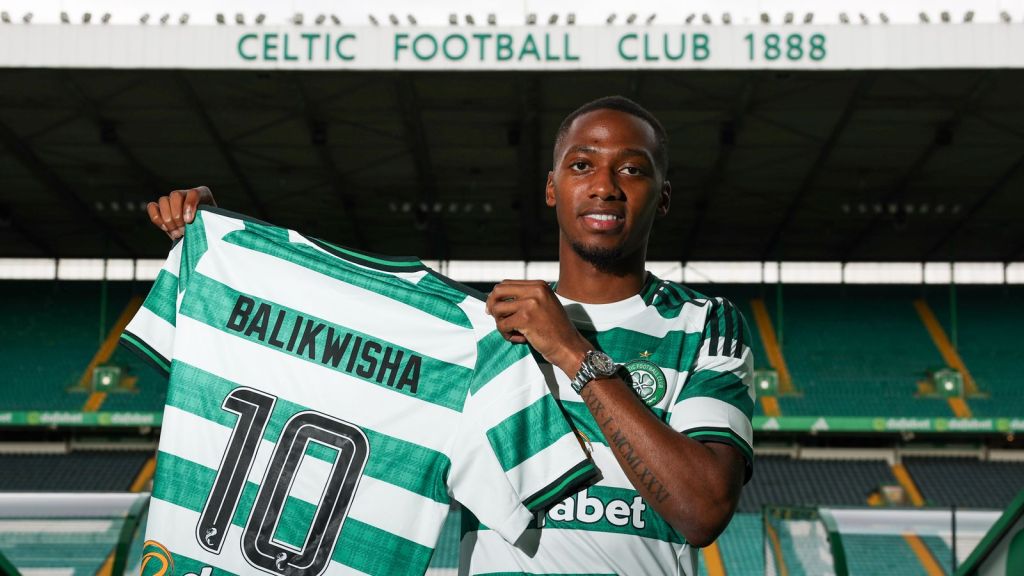
There is a rhythm to Celtic’s transfer history, a kind of pulse that rises and falls with each passing window. Over the last five years that rhythm has been erratic, sometimes thrilling, sometimes chaotic, sometimes so flat that supporters wondered whether anyone at the club could hear the alarms ringing. What follows is the story of those years, told through the players who arrived, the ones who left, and the windows that shaped the club’s fortunes on and off the pitch
2020 to 2021: A Season That Slipped Away
The summer of 2020 should have been a coronation. Celtic were chasing ten in a row, the squad was experienced, and the club had the financial muscle to strengthen decisively. Instead, the window drifted into a strange mixture of panic and misplaced optimism. Vasilis Barkas arrived for a significant fee and never looked comfortable. His early performances were hesitant, his confidence evaporated quickly, and the position that had once been a source of stability became a weekly debate. Albian Ajeti followed, a striker with pedigree who scored early and then faded into the background as fitness and form deserted him. Shane Duffy came in with the aura of a leader, yet the system exposed his weaknesses and his loan became a symbol of a season unravelling. Even Diego Laxalt, who brought energy and drive, could not provide the consistency required.
Only David Turnbull offered genuine light in the gloom. His creativity and composure hinted at a future Celtic could build around, but one bright spark could not rescue a window that had already set the tone for a troubled campaign. The departures of Craig Gordon, Jonny Hayes and Jozo Šimunović removed experience at precisely the moment Celtic needed it most. The season drifted, the title slipped away, and the January window did nothing to change the trajectory. Jonjoe Kenny arrived and did a job, but the squad remained imbalanced and uncertain. The club had gambled on short term fixes and lost.
2021 to 2022: The Postecoglou Rebuild
If the previous season had been defined by drift, the summer of 2021 was defined by urgency. Ange Postecoglou arrived into a storm and needed reinforcements quickly. What followed was one of the most transformative windows in modern Celtic history. Kyogo Furuhashi became the heartbeat of the attack, a forward whose movement and finishing electrified the team. Joe Hart brought leadership and calm to a position that had been in turmoil. Liel Abada delivered goals and maturity beyond his years. Jota and Cameron Carter Vickers arrived on loan and immediately looked like players Celtic should do everything to keep.
There was a clarity to the recruitment that had been missing for years. Every signing fit the system, every player added something tangible, and the squad began to resemble a coherent unit again. Even the sales made sense. Odsonne Edouard and Kristoffer Ajer left for strong fees, and while Ryan Christie’s departure felt undervalued, the overall balance of the window was overwhelmingly positive.
The winter window continued the momentum. Reo Hatate announced himself with a derby performance that will be replayed for years. Daizen Maeda brought relentless pressing and versatility. Tomoki Iwata added depth and intelligence. Only Yosuke Ideguchi struggled to find his place, but the overall impact of the January business was undeniable. Celtic were rebuilding at pace and with purpose.
2022 to 2023: Consolidation and the First Cracks
The summer of 2022 felt like a victory lap. Celtic secured Jota and Carter Vickers permanently, two deals that would have been unthinkable a few years earlier. Aaron Mooy arrived and quietly became one of the most influential midfielders in the league. The squad looked strong, balanced and ready to push on.
Yet beneath the surface, small cracks began to appear. Alexandro Bernabei was signed as a long term left back option but struggled defensively. Sead Hakšabanović showed flashes of quality without ever cementing a role. The club were clearing out the remnants of previous failed windows, but some of the new arrivals carried the same sense of uncertainty.
The winter window reflected that shift. Oh Hyeon Gyu arrived with promise but needed time. Tomoki Iwata offered depth rather than transformation. Celtic were still strong, still winning, still coherent, but the recruitment had lost a little of its sharpness. The model was beginning to tilt back toward volume rather than precision.
2023 to 2024: The Regression Window
Supporters will remember the summer of 2023 as the moment the recruitment model lost its way. The club had money to spend after Jota’s departure, yet the replacements never matched his influence. Maik Nawrocki and Gustaf Lagerbielke arrived with potential but struggled with injuries, adaptation and system demands. Marco Tilio barely featured. Kwon Hyeok kyu looked overwhelmed. Even Yang Hyun jun, who showed glimpses of talent, was clearly a long term project rather than an immediate contributor.
Luis Palma offered goals and creativity early on, yet his form fluctuated and he could not carry the burden of replacing Jota alone. The squad felt bloated with players who were not ready, and the team entered the season with glaring gaps that had not been addressed. The January window brought Nicolas Kühn, a tidy player but not the kind of signing who shifts a title race. Celtic had slipped back into the habits that had cost them in 2020, and the consequences were felt on the pitch.
2024 to 2025: A Model Under Pressure
By the summer of 2024 the club were trying to correct course. Adam Idah returned permanently after a strong loan spell, a move that made sense even if the fee raised debate. Paulo Bernardo was secured, offering continuity in midfield. Yet the window lacked the decisive quality that had defined the early Postecoglou era. Many players left, some for modest fees, others simply to clear space. The squad felt lighter, but not necessarily stronger.
The winter of 2025 exposed the limits of the model. Celtic chased targets, missed out on several, and entered the second half of the season short in key areas. Reports of failed negotiations and late scrambles fed a growing frustration among supporters. The club had once again reached a point where the recruitment strategy felt reactive rather than proactive.
2025 to 2026: A Season of Transition and Tension
Celtic’s 2025–26 transfer business unfolded like a club trying to move forward while still repeating the same old patterns. The summer window carried the emotional lift of Kieran Tierney’s return, yet beyond that headline moment the recruitment strategy drifted back toward volume and potential rather than certainty. Money was spread across a cluster of prospects such as Benjamin Nygren, Shin Yamada, Michel‑Ange Balikwisha and Sebastian Tounekti, all of whom arrived with upside but none with the proven quality required to elevate the starting eleven. Several development‑level signings reinforced the sense that Celtic were still prioritising long term resale over immediate impact. Meanwhile, key departures like Nicolas Kühn, Adam Idah and Greg Taylor left gaps that were never convincingly filled. By the end of August the squad looked thinner, younger and no closer to solving the issues that had defined the previous two seasons.
The January window only deepened that frustration. Celtic added Julian Araujo on loan, a tidy and technically capable full back, but not the kind of reinforcement that shifts a title race or stabilises a squad already stretched by injuries and inconsistency. More young players were moved out on loan, further reducing depth without meaningfully improving the first team. The club’s overall spend across the season was minimal, and the lack of decisive mid‑season action left Celtic exposed in the same areas that had been obvious in August. In the end, the 2025–26 transfer cycle felt like another year where the club bought projects when it needed starters, trimmed the squad without upgrading it, and allowed a season of promise to drift because the recruitment model could not match the demands of the pitch.
The Five Year Verdict
Across the five‑year cycle, Celtic’s transfer strategy has swung between moments of clarity and long stretches of muddled thinking. The early Postecoglou years remain the high watermark, a period when the club aligned recruitment with a clear tactical identity and reaped the rewards. But the further the club drifted from that blueprint, the more the cracks widened. The 2023 and 2024 windows exposed the fragility of a model built on volume and potential rather than proven quality. The 2025–26 cycle confirmed it. What had once been a clever, efficient system for finding undervalued talent had become a conveyor belt of players who were not ready, not suited, or simply not good enough to influence a title race.
The failures of the 2025–26 windows underline that decline more starkly than any other season in the review. Michel‑Ange Balikwisha arrived with pedigree and expectation, yet barely featured and often failed to make the matchday squad. His signing was meant to add dynamism to the left side, but instead became another example of money spent without a clear plan for integration. Joel Mvuka followed a similar path. Touted as a high‑ceiling winger with pace and directness, he struggled to break into the team, drifted out of contention, and quickly became a symbol of a recruitment department gambling on upside rather than addressing immediate needs. These were not cheap punts. They were multi‑million‑pound commitments that delivered almost nothing on the pitch.
The striker situation was even more telling. Tomáš Čvančara and Junior Adamu were brought in to add firepower, physicality and variety to the forward line, yet neither provided the goals or presence Celtic desperately needed. Čvančara’s flashes of quality never translated into sustained output, while Adamu’s contribution was sporadic at best. Between them, they failed to ease the burden on the existing forwards or change the dynamic of games when Celtic were chasing results. For a club that has historically relied on elite strikers to define eras, the lack of return from two significant attacking investments was a glaring indictment of the scouting and decision‑making process.
When you zoom out across the five years, the pattern becomes impossible to ignore. Celtic’s best windows were built on clarity, decisiveness and alignment with the manager. Their worst were defined by scattergun recruitment, late scrambles, and an overreliance on “project” players who rarely developed into first‑team contributors. The 2025–26 windows did not just fail to improve the squad. They actively weakened it by consuming budget, blocking pathways, and leaving the team short in the positions that matter most. The club bought potential when it needed certainty. It bought quantity when it needed quality. It bought profiles that looked good on spreadsheets but never translated to the pitch.
The final verdict is blunt but fair. Celtic have shown they can win the market, but too often they have lost the moments that define seasons. The next cycle must break from the habits that have held the club back. Fewer gambles. More guaranteed starters. A recruitment model that serves the manager, not the balance sheet. The blueprint exists. The question now is whether Celtic finally choose to follow it


Leave a Reply